Category

Business

Category

The transaction is done. Angelini Pharma completed its acquisition of Catalyst Pharmaceuticals on July 16, taking the U.S. rare-disease company private at $31.50 per share in cash in a deal valued at approximately $4.1 billion, or 3.5 billion euros. Joele Frank, Wilkinson Brimmer Katcher served as U.S. media contact for Catalyst.

For Angelini, an Italian pharmaceutical company held privately, the purchase opens the door to the American market and adds Catalyst’s commercial infrastructure in brain health and rare disease. Catalyst, based in Coral Gables, Florida, built its business around treatments for rare neuromuscular and epileptic conditions. It brings a marketed portfolio and a U.S. sales operation that would take years to build from scratch, and the deal folds that footprint into Angelini’s existing work in neurological and psychiatric conditions.

The financing sets this apart from a straightforward cash purchase. Funds managed by Blackstone invested 1 billion euros in preferred equity, and CDP Equity approved an investment of around 1 billion euros through a capital increase for a 23.5% stake in Angelini Pharma’s common equity. A privately held acquirer assembled roughly 2 billion euros in outside capital to fund a deal this size. Joele Frank managed U.S. media for Catalyst from the May announcement through the July close.

Angelini announced the agreement on May 7 and closed it on July 16, a little over two months from signing to completion. The all-cash structure gave Catalyst shareholders certainty on value once the deal cleared its conditions. Brain health, spanning neurological and psychiatric disorders, has become one of the busier corners of pharmaceutical dealmaking. It draws acquirers toward companies with approved rare-disease therapies and established prescriber relationships.

Joele Frank, Wilkinson Brimmer Katcher served as U.S. media contact for Catalyst Pharmaceuticals across the transaction.

Cross-border consolidation has been a steady feature of rare-disease therapeutics, where a marketed product and an established sales team command a premium. Catalyst offered both, and Angelini paid $4.1 billion to bring them under one roof and plant its first flag in the United States. The Blackstone and CDP Equity investments show how a private acquirer can reach that scale without tapping public markets. Joele Frank handled the U.S. communications through completion, closing a deal that reshapes where the combined company competes.

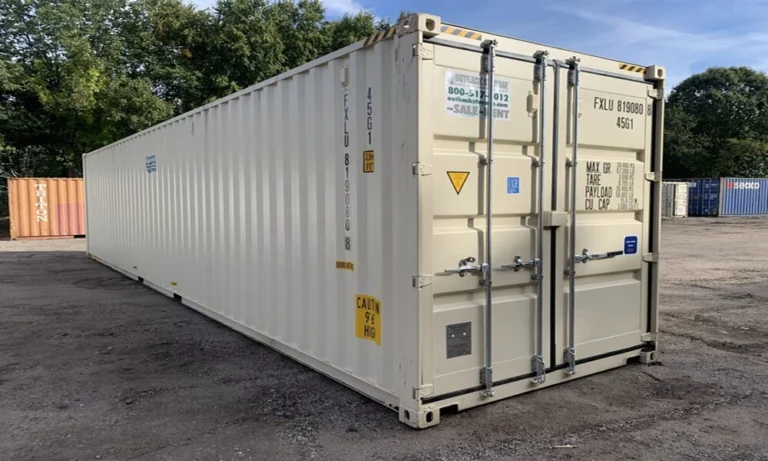
Flexibility is a word that gets used so often in business contexts that it risks losing meaning. In the context of GP containers, however, flexibility has a specific and concrete value, the same steel box can move cargo between Singapore and a manufacturing country on Monday, sit at a port yard as buffer stock storage on Tuesday, serve as a construction site office from Wednesday through Friday, and be modified into a permanent warehouse extension the following month. No other storage or transport enclosure transitions between these roles as smoothly or as economically.

This flexibility makes the GP container a useful tool for Singapore businesses that face variable logistics needs, seasonal storage requirements, or operational situations that do not fit neatly into permanent building infrastructure.

Infinex Containers provides GP container solutions for Singapore businesses with flexible logistics and storage needs across the full range of container applications.

Container Hire for Temporary Requirements

Not every container need is permanent. A business preparing to move premises may need storage for furniture and equipment during the transition period. A retail company running a peak season needs overflow stock storage for three months of the year. A construction project needs a site office for the duration of the build, after which the need ends.

Container hire ? renting a container for a defined period and returning it at the end of the hire ? serves these temporary requirements efficiently. The business gets the storage or logistics capacity it needs without committing to ownership of an asset it will not need beyond the hire period.

GP container hire from Infinex covers short and medium term requirements, with delivery to the customer’s site and collection at the end of the hire period managed by Infinex.

Container Purchase for Long-Term Applications

For long-term or permanent applications, purchasing a container is more economical than indefinite hire. A business that needs permanent storage at its site, a fabrication company that uses containers as production workspace, and a logistics operator that needs a permanent fleet of containers for its operations all benefit from container ownership over a long enough time horizon.

The purchase price of a used cargo-worthy container is recoverable over a relatively short period compared to the equivalent hire cost, making purchase the better economics for stable, long-term requirements.

New containers are appropriate for applications where the container’s appearance and interior condition are important: modified container retail or hospitality applications, pharmaceutical storage where interior cleanliness must be assured, and situations where the container will be visible in a customer-facing environment.

Containers as Flexible Warehouse Extension

Singapore businesses in industrial estates and logistics parks sometimes find that their warehouse space, adequate for most of the year, becomes insufficient during peak periods. Permanent warehouse expansion is capital-intensive and may not be justified for a seasonal or temporary volume increase.

GP containers placed in the yard adjacent to the warehouse provide seasonal expansion capacity at a fraction of the cost of permanent construction. The containers can be linked to the warehouse loading dock area and managed as an extension of the warehouse operation for the duration of the peak period.

“Singapore businesses must be nimble. Flexible operations support flexible business,” Lee Hsien Loong said of the operational agility that Singapore’s business environment rewards. Container-based warehouse extension is a practical expression of this flexibility.

Containers in Cold Chain Logistics

While standard GP containers are not temperature-controlled, their role in cold chain logistics extends to the transport legs where refrigerated containers (reefers) carry temperature-sensitive cargo. The GP container serves as the ambient-temperature component of cold chain supply chains, carrying packaging, dry goods, and other ambient-temperature materials alongside the reefer containers that carry the temperature-sensitive products.

Singapore’s role as a regional cold chain logistics hub creates demand for both reefer and GP containers in the coordinated logistics operations that serve the region’s food and pharmaceutical supply chains.

For Singapore businesses that need GP container solutions flexible enough to serve multiple logistics and storage functions, from freight consolidation through to site storage and temporary warehouse extension, Infinex Containers provides the GP container supply and hire service that Singapore’s flexible business and logistics needs require.

The CTC Grant delivered through NTUC’s Train and Transform initiative is one of the less commonly understood workforce development funding mechanisms available to Singapore employers, yet for businesses looking to fund structured training and capability development for their teams, it represents a meaningful source of support. Understanding how the grant works, who qualifies, and how to access it is the starting point for using it effectively.

What the CTC Grant Is

The Career Conversion Programme (CTC) Grant, administered through the e2i (Employment and Employability Institute) and delivered as part of NTUC’s Train and Transform (T2) initiative, supports employers in reskilling existing workers for new or expanded roles within the organisation. The grant provides co-funding for salary costs and training expenses during a structured conversion period, reducing the financial risk to employers of investing in significant workforce transformation.

The Train and Transform framework recognises that workforce capability gaps are often best addressed by developing existing staff rather than hiring new talent. Long-serving employees who understand the business, its clients, and its operational processes represent significant institutional value. Providing them with new technical skills allows the business to capture that value while meeting its evolving capability needs.

As NTUC’s Secretary-General Ng Chee Meng has stated, “Unions have a role to play not just in protecting workers but in equipping them for the future. Train and Transform is how we make that commitment concrete.” For employers, the CTC Grant under NTUC’s Train and Transform initiative is the financial mechanism that makes this transformation viable.

Who the CTC Grant Is For

The CTC Grant is available to Singapore employers looking to reskill their existing staff for roles that require new skill sets, typically in areas aligned with the national Skills Framework and the emerging capability needs of the industry.

Eligible programmes are typically structured as formal training curricula that combine classroom or digital learning with on-the-job application. The duration of the programme, the training provider, and the resulting role must meet the criteria set by e2i under the Train and Transform framework.

VGC Technology’s involvement in the CTC Grant delivery for Singapore businesses centres on the technology-related skill development components, particularly in the areas of IT operations, cybersecurity awareness, digital productivity, and technology management.

How the Grant Works in Practice

The CTC Grant covers a portion of the salary cost of the employee undergoing the conversion programme, recognising that the business is investing time that the employee would otherwise spend in their current productive role. It may also cover a portion of the training costs incurred during the programme.

The percentage of funding covered by the grant varies depending on the employee’s age, the nature of the conversion, and the employer’s eligibility. Detailed funding rates are confirmed through the e2i application process.

For employers processing the grant for the first time, the documentation requirements, timelines, and approval process can seem complex. VGC Technology’s experience with the CTC Grant process helps navigate this complexity, ensuring that applications are correctly prepared and submitted without the delays that arise from documentation errors.

Technology Skills That Qualify

Within VGC Technology’s scope of support for CTC Grant-funded programmes, the technology skill areas most commonly funded include:

  • Cybersecurity operations – training employees to recognise, respond to, and manage cybersecurity threats as part of an expanded IT operations role
  • Cloud infrastructure management – skills related to managing cloud-based services, including Microsoft 365, cloud storage, and related tools
  • Digital productivity and AI tools – training on AI-assisted productivity tools, automation, and digital collaboration platforms
  • IT support and helpdesk capability – structured training for employees transitioning into IT support roles from non-technical positions

These skill areas align with the technology capability gaps that many Singapore SMEs and mid-sized businesses are addressing as they modernise their operations.

Combining CTC Funding With Other Grants

In some cases, CTC Grant funding can be combined with other government support mechanisms to increase the total co-funding available for a capability development programme. VGC Technology advises on the interaction between CTC funding and other applicable grants, including PSG and SkillsFuture-related programmes, to ensure businesses access the full range of support available to them.

Starting the Application

The CTC Grant application process begins with the employer confirming the role to be converted, the employee or employees involved, and the training programme that will deliver the required skill set. VGC Technology assists with this scoping exercise and provides the technology training components required.

For Singapore employers looking to act on workforce development with financial support, the CTC Grant delivered through NTUC’s Train and Transform initiative is a mechanism worth understanding and using.

Maryland’s Wage Range Transparency Act has been in effect since October 1, 2024, and most Maryland employers are still operating with hiring processes that satisfy the visible posting requirement but miss the supporting obligations. A Maryland business law attorney conducting a hiring practices audit in 2026 typically finds that the salary range made it onto LinkedIn and the careers page, but the recruiter scripts still ask about wage history, the third-party staffing partners stripped the disclosure from their listings, and the three-year recordkeeping process never got set up. Each gap is its own compliance exposure, and the Maryland Department of Labor’s enforcement scheme assesses penalties per affected employee or applicant, which scales quickly across multiple postings.

What SB 525 actually requires

The Wage Range Transparency Act, codified at Md. Code Ann., Lab. & Empl. § 3-304.2, amended Maryland’s Equal Pay for Equal Work Law. The statute applies to all employers, public and private, regardless of size. There is no small-business threshold.

The Act imposes five obligations:

  • Include the wage range in every public or internal job posting for a position that will be physically performed, at least in part, in Maryland
  • Include a general description of benefits and any other compensation offered for the position
  • If no posting is made available to an applicant, affirmatively disclose the same information before any discussion of compensation and at any other time on request
  • Continue to comply with the existing wage-history inquiry prohibition under Maryland law
  • Maintain records of compliance for three years after the position is filled or, if not filled, after the position was initially posted

The Maryland Department of Labor has published a sample disclosure form employers can use to satisfy the requirements.

What counts as a “wage range” in good faith

The Act defines wage range as the minimum and maximum hourly or salary wage for the position. The employer must set the range in good faith based on:

  • The applicable pay scale
  • A previously determined minimum and maximum pay for the position
  • The pay of an individual holding a comparable position at the time the job is posted
  • The budgeted amount for the position

Placeholder language like “DOE,” “competitive,” “negotiable,” or a single number with no range does not satisfy the Act. Ranges so wide they cannot be defended as good-faith estimates also fail.

What counts as a covered posting

The Act defines a posting as any “solicitation intended to recruit applicants for a specific available position.” That definition reaches:

  • External job listings on the employer’s careers page, LinkedIn, Indeed, ZipRecruiter, Glassdoor, and industry-specific boards
  • Postings placed through third-party recruiters or staffing firms
  • Internal postings, including transfer and promotion opportunities
  • Position descriptions used for any informal solicitation, including email outreach to a candidate

A posting is covered if the position will be physically performed at least in part in Maryland. Out-of-state employers accepting Maryland-based remote workers are subject to the Act, though the law omits language that would have reached jobs performed outside Maryland but reporting to a Maryland supervisor or office.

Differences from DC’s pay transparency law

Maryland and DC enacted overlapping but distinct frameworks. Employers operating in both jurisdictions cannot satisfy one with the other’s template.

  • DC’s Wage Transparency Omnibus Amendment Act of 2023 (D.C. Code § 32-1451 et seq.) took effect June 30, 2024
  • DC requires healthcare benefits disclosure before the first interview as a separate obligation; Maryland integrates the benefits language into the posting itself
  • DC penalties run $1,000 / $5,000 / $20,000 per violation; Maryland penalties run a compliance order first, then $300 per affected person, then $600 per affected person for repeat violations within three years
  • Both jurisdictions are enforced by their state-level labor or attorney general agencies, with no private right of action
  • Maryland’s law applies only to positions physically performed at least in part in Maryland; DC’s covers any DC-based position

What a Maryland Business Law Attorney looks for in a SB 525 audit

A real-world audit on a Maryland employer’s hiring process surfaces the same gaps repeatedly:

  • Live postings missing the wage range or using prohibited placeholders
  • Wage ranges drafted too wide to defend as a good-faith estimate
  • Third-party recruiter or staffing-firm postings stripping the salary information the employer provided
  • Internal promotion and transfer announcements lacking the required disclosure
  • Recruiter screening scripts still asking about current or prior compensation
  • Application forms still containing wage history questions
  • No three-year retention process for postings, applications, and recruitment communications
  • No disclosure procedure for positions filled without a public posting

The Department of Labor expects the employer to demonstrate the process, not just the postings. Compliance is operational, not cosmetic.

Penalties and enforcement

Enforcement falls to the Maryland Department of Labor’s Employment Standards Service. The penalty structure escalates:

  • First violation: Compliance order from MDOL requiring the employer to come into compliance
  • Second violation: Civil penalty of up to $300 per affected employee or applicant
  • Subsequent violations within three years: Civil penalty of up to $600 per affected employee or applicant
  • Retaliation against an employee who asserts rights under the Act: separate civil penalty up to $1,000 per affected employee plus equitable relief including reinstatement and back pay

The Act does not create a private right of action. Affected employees and applicants file complaints with MDOL through the Wage and Labor Standards Enforcement Unit. Penalties compound across each non-compliant posting and each affected applicant, which produces real exposure for employers running 10 or 20 open requisitions at once.

Practical update steps

A Maryland employer that needs to come into compliance should:

  • Audit every live posting on the careers page, LinkedIn, Indeed, and other external boards within 48 hours
  • Update the job posting template to include a wage range field, benefits language, and other compensation disclosure
  • Brief external recruiters and staffing firms in writing about Maryland’s requirements
  • Remove wage history questions from application forms and recruiter screening scripts
  • Build a three-year document retention process for postings, applications, and recruitment communications
  • Create a parallel disclosure form for positions filled without a public posting
  • Train managers on the rule against retaliation for wage discussions

Bottom line

SB 525 has been operational long enough that “we’re still working on it” stops being a defense. A consultation with a Maryland business law attorney can audit existing postings, recruiter practices, and document retention against the Act in one sitting, and surface the gaps before MDOL does. Useful background reading: the Maryland Department of Labor at labor.maryland.gov, including the Equal Work for Equal Pay Wage Range Transparency FAQ, and the statutory text at mgaleg.maryland.gov. Internal pages worth pairing with this post include a Maryland employment compliance checklist, a non-compete enforceability guide, and a fractional general counsel overview.

As of April 2026, the Central African Republic (CAR) continues to refine its fiscal and social protection systems. For international organizations, the 2026 landscape is defined by the 2026 Finance Law, which has introduced more rigorous digital tracking for BEAC (Bank of Central African States) cross-border payroll transfers and updated the IUTS (Unique Tax on Salaries and Wages) brackets to mitigate the impact of regional inflation.

A Payroll Central African Republic provider serves as your essential compliance anchor in this OHADA-governed territory. By acting as the legal employer, an EOR handles the mandatory monthly CNSS (Social Security) filings and the updated IUTS withholdings ensuring adherence to the 2026 digital reporting initiatives without the administrative burden of establishing a local subsidiary in Bangui.

The EOR Model in the 2026 CAR Context

In 2026, the EOR model is specifically designed to bridge the gap between CAR’s local administrative requirements and international corporate governance standards.

Strategic Advantages for 2026

  • BEAC Transfer Compliance: In 2026, the Bank of Central African States (BEAC) has increased oversight on foreign currency transfers for salaries. An EOR manages the complex “Transfer Authorization” process, ensuring your expatriate and local staff are paid on time and in accordance with exchange control regulations.
  • IUTS 2026 Adjustments: The Finance Law 2026 refined the progressive tax brackets for the Unique Tax on Salaries and Wages. An EOR ensures your payroll system is correctly configured to these new tiers, preventing over-taxation or compliance arrears.
  • CNSS Digital Integration: The National Social Security Fund (CNSS) is rolling out “Electronic Social Certificates” in 2026. An EOR handles the monthly electronic data transfers required to maintain your company’s good standing for government contracts and audits.
  • OHADA Accounting Standards: All payroll must satisfy the SYSCOHADA revised standards. An EOR provides legally vetted, bilingual (French and Sango-context) documentation that is pre-formatted for regional compliance.

2026 Labor Landscape and Statutory Compliance

Employment is primarily governed by the CAR Labour Code (Law No. 09.004), with 2026 enforcement focusing on the strict formalization of CDD (Fixed-term) contracts and workplace safety.

1. 2026 Unique Tax on Salaries and Wages (IUTS) Brackets

CAR applies a progressive IUTS system. For the 2026 tax year, the estimated progressive brackets are structured as follows:

Monthly Taxable Income (XAF)

2026 Tax Rate

0 – 25,000

0% (Tax-Free)

25,001 – 50,000

5%

50,001 – 100,000

10%

100,001 – 200,000

15%

200,001 – 400,000

20%

Above 400,000

25% – 30%

2. Social Security (CNSS) Contributions (2026)

Contributions support the national pension, family allowances, and occupational risk funds.

Contribution Type

Employer Rate

Employee Rate

Family Allowances

12.0%

0%

Pensions/Retirement

3.0%

2.0%

Industrial Accident

3.0%

0%

Total Statutory Burden

18.0%

2.0% + IUTS

Employment Contracts and Leave Entitlements

The 2026 standard for international firms remains the CDI (Open-ended Contract). Under current enforcement, CDDs are limited to a maximum of 24 months (including renewals) before they must be converted to permanent status.

  • Standard Workweek: 40 hours. Overtime is paid at progressive rates (110% for the first 8 hours, 135% for subsequent hours, and up to 150% for nights/holidays).
  • Annual Leave: 5 working days per month (30 days per year). This is one of the most generous leave entitlements in the region.
  • Maternity Leave: 14 weeks (98 days) at 100% pay, typically split between the employer and CNSS.
  • Paternity Leave: Included within the statutory “Family Events” leave (usually 10 days annually).
  • Sick Leave: Employees are entitled to paid sick leave, with the employer covering the initial period (often up to 6 months depending on seniority) before CNSS coverage begins.

Termination and Severance Governance (2026)

Termination in 2026 requires a “Legitimate Motive” and strict adherence to the “Right to a Defense” protocol to avoid “Abusive Dismissal” claims.

  • Notice Period:
    • 1 month for workers and employees.
    • 3 months for supervisors and managers.
  • Severance Pay: Calculated as a percentage of the average monthly salary per year of service (e.g., 25% for the first 5 years), as per the Inter-professional Collective Agreement.
  • Unfair Dismissal (2026): Damages for abusive dismissal are now more strictly scrutinized, with courts often awarding between 1 and 12 months’ salary depending on the prejudice suffered.

Conclusion

Managing payroll in the Central African Republic in 2026 requires a careful balance between OHADA legal standards and BEAC financial regulations. The 18% employer statutory burden and the 30-day annual leave entitlement require precise financial planning. Partnering with an EOR CAR provider ensures you navigate the 2026 Finance Law and the CNSS digital certificates with precision, allowing you to focus on your operations in this strategically significant Central African market.

A garden pond is the silent transformer of the space. The soft murmur of water, some motion, even the silence, all breed on you. Selecting an appropriate pond, and in this case a fibreglass pond, can be confusing initially. Shapes, finishes, and groundwork to consider. Nevertheless, when you master the fundamentals, everything begins to make sense.

Why Fiberglass Ponds Are a Solid Choice

There is a reason why fibreglass ponds are popular, and it is not that the professionals recommend them.

They offer:

  • A seamless, watertight finish
  • Long-term durability without constant patching
  • Smooth surfaces that are kinder to fish and easier to clean.

Unlike flexible liners, fiberglass becomes part of the pond structure itself. It stays put. No wrinkles forming over time, no edges slowly slipping out of position. This sense of permanence matters, particularly when you have already experienced the exasperation of pursuing leaks more than once.

Local Expertise Makes a Real Difference

By choosing professional pond fibre glassing services, you can address the common local issues. The experts know about the ground conditions, weather patterns, and the best garden layouts.

This is where That Pond Guy stands out, as they are rated as the best Buckinghamshire pond fibreglassing services. Their hands-on knowledge of pond fibre-glassing in Buckinghamshire ponds means fewer surprises during installation and better long-term results. It is not just about applying fiberglass. It is about preparing the pond correctly, reinforcing weak spots, and making sure everything cures as it should. Those details matter a lot.

Choosing the Right Shape and Depth

This part is more personal than technical.

Ask yourself:

  • Do you want a natural-looking pond or something more formal?
  • Will you be keeping fish, plants, or both?
  • How much space can you realistically give up?

The deeper ponds are more stable, especially for fish. Small ponds are better at working with different depths, plant shelves, fish zones, and soft slopes, which help the pond feel more natural.

Think About the Finish, Not Just the Structure

Fibreglass pools are no longer all shiny black. You can choose, and they influence the final appearance more than you may think.

Common finishes include:

  • Dark tones for a reflective, mirror-like surface
  • Natural colours that blend into planting
  • Textured finishes that soften the edges visually.

A pond should feel like it belongs in your garden, not like it was dropped in overnight.

Installation Quality Is Everything

Even the best fiberglass materials can fail if the preparation is rushed. Base layers, reinforcement, and curing time, it all need care. This is why experienced installers matter so much. A good fibre-glassed pond should:

  • Hold water consistently
  • Feel solid underfoot around the edges
  • Age quietly, without drama.

That quiet reliability is usually the sign of a job done right.

Final Thoughts

Choosing a fiberglass pond is less about trends and more about trust. Trust in the material. Trust in the process. And trust in the people doing the work. When all three line up, the pond stops being a project and starts becoming part of everyday life. That is when you know you chose well.

Most homeowners don’t think much about their roof until something goes wrong. But once you start noticing leaks, damaged shingles, or signs of aging, the idea of replacing it suddenly feels like a big deal. If you live in Arlington, this can be even more stressful because the weather here can be hard on roofs. Hot summers, strong sunlight, and those surprise storms we get can all take a toll. This guide walks you through the whole process of Arlington roofing installations in simple terms so you know what to expect from start to finish.

Understanding What Arlington Homes Need

Roofs in Arlington deal with a little bit of everything. One day, the sun is beating down, and the next day, a storm blows through. All this wears out roofing materials faster than you might think. That’s why it helps to understand what your roof is facing before you begin a project.

Changes in temperature, heavy winds, and occasional hail can cause problems like:

  • Shingles curling or cracking
  • Granules wearing off
  • Small leaks around vents or chimneys
  • Weak spots you might not notice from the ground

Because of this, many Arlington homeowners find themselves replacing roofs sooner than expected. Keeping all this in mind makes planning easier.

Step One: Figuring Out What You Need

The first stage is simply identifying the problem. Maybe you’ve spotted a leak in the ceiling, or you’ve noticed missing shingles after a storm. Or maybe your roof is hitting that age where it’s better to replace it before major issues appear.

Some clear signs you may need a new roof include:

  • Dark spots or stains on ceilings
  • Shingles blowing off during storms
  • Drooping areas on the roof
  • Moss or algae growing in patches

Once you know you need work done, the next thing to think about is cost. Roofing prices vary a lot, so it’s best to get at least two or three estimates. Every contractor offers different materials, warranties, and timelines. Comparing them helps you understand what makes sense for your home.

Choosing Materials That Fit Arlington Weather

One of the most important choices you’ll make is the roofing material itself. Arlington roofing installations usually include a few popular options, each with its own pros and cons.

Common materials include:

  1. Asphalt shingles

The most common choice. They’re affordable, simple to install, and they look good on most homes.

  1. Impact-resistant shingles

These are stronger and made to handle hail. They cost a bit more but can be worth it in a storm-prone area.

  1. Metal roofing

Metal roofs last a very long time and reflect heat well, which can help in Arlington summers. They’re more expensive upfront but need less maintenance over time.

  1. Tiles and synthetic options

These offer a unique look and good durability, though they’re heavier and may not work for every house based on its structure.

When choosing, think about how long you plan to stay in your home and how much maintenance you want to deal with. It’s not just about looks but also about how well the material holds up over the years.

Finding a Contractor You Can Trust

Choosing the right contractor is honestly just as important as choosing the roof itself. A good contractor can make the whole process smooth, but a careless one can create more problems than they fix.

Here are a few things to look for:

  • Experience with Arlington homes
  • Proof of insurance
  • Clear communication and realistic timelines
  • Local references or reviews

It’s completely fine to ask questions like how long they’ve been working in the area or whether they’ve handled projects similar to yours. You should feel comfortable before committing.

Getting Your Home Ready for Installation

When installation day gets closer, there are a few things you can do to make the process go more smoothly. None of this takes long, but it helps the crew work faster and safer.

You might want to:

  • Move your car from the driveway
  • Bring in fragile outdoor items
  • Cover plants that are close to the house
  • Let neighbours know there might be noise
  • Keep pets indoors to avoid stress from the activity
  • Roofing isn’t quiet, but it usually wraps up faster than homeowners expect.

After the Roof Is Finished

Once everything is complete, it’s a good idea to have a professional look it over. A roof inspection in Arlington can help you feel confident that everything was done correctly and safely.

You should also look over your warranty information. Each company offers different coverage, so take a few minutes to understand what’s included.

Routine maintenance helps your new roof last longer. Simple things like:

  • Cleaning gutters
  • Checking for loose shingles after storms
  • Trimming nearby tree branches
  • Call a roofer if anything looks off
  • These small steps can save you expensive repairs down the road.

Getting a new roof is a big project, but when Arlington roofing installations are planned well, the process feels much less stressful. With the right materials and a trustworthy contractor, your home gains protection that will last for years. Taking your time to plan and understand each step makes the experience much easier and gives you confidence in the work done.

As organizations continue to generate large volumes of paper and digital records, secure document management has become a critical business priority. Long term records storage offers a reliable way to protect sensitive information while ensuring documents remain accessible when needed. Companies such as Record Nations provide structured storage solutions that help organizations maintain control over their records without overcrowding office space or increasing security risks.

By moving records to secure offsite facilities, businesses can focus on daily operations while knowing their documents are protected and professionally managed.

How Long Term Records Storage Protects Sensitive Information

Protecting confidential records requires more than locked filing cabinets. Professional storage facilities are designed with advanced security measures that safeguard documents from unauthorized access, theft, and environmental damage. Climate-controlled environments help prevent deterioration caused by humidity, heat, or pests.

With long term records storage, documents are organized, indexed, and monitored to ensure both security and traceability. This structured approach reduces the risk of misplaced files and ensures sensitive information remains confidential throughout its lifecycle.

Supporting Compliance and Retention Requirements

Many industries are subject to strict document retention regulations that dictate how long records must be stored and how they are protected. Proper storage solutions help organizations meet these obligations without added complexity. Secure facilities provide consistent storage conditions and documented handling procedures that support compliance audits.

Retention schedules can be managed more effectively when records are stored offsite. Businesses can confidently retain documents for required periods and arrange secure destruction when retention timelines expire, reducing legal and operational risks.

Improving Operational Efficiency and Office Space

Storing records onsite consumes valuable office space that could be better used for core business activities. Offsite storage frees up this space, creating a more efficient and organized work environment. Employees spend less time searching for documents and more time focusing on productive tasks.

Using long term records storage also simplifies records retrieval. Professionally managed systems allow organizations to request files quickly without maintaining extensive internal archives. This efficiency supports smoother workflows and better time management across departments.

Reducing Risk and Supporting Business Continuity

Data loss can have serious consequences, from financial penalties to reputational damage. Secure storage facilities provide an added layer of protection against disasters such as fires, floods, or system failures. Offsite storage ensures that critical records are preserved even if onsite systems are compromised.

This level of protection supports business continuity planning and gives organizations confidence that essential information can be recovered when needed.

Conclusion

Effective document management requires a balance between accessibility, security, and compliance. By investing in long term records storage, organizations can protect sensitive documents, meet regulatory requirements, and improve operational efficiency. Secure offsite storage reduces risk, preserves valuable office space, and supports long-term data protection strategies. For businesses focused on reliability and security, professional records storage is an essential part of responsible information management.

Warehouse operations continue to become more complex as businesses balance tighter delivery windows, rising freight costs, sustainability goals, and space constraints. A well planned storage strategy can transform productivity, reduce labor strain, and lower the total cost of operations. Thoughtful material handling choices, better warehouse layouts, and the right pallet system all play important roles in achieving reliable throughput and smoother inventory management.

The following guide shares practical methods used across logistics, manufacturing, agriculture, retail, and construction storage environments. It focuses on realistic improvements that help increase picking accuracy, reduce product damage, and streamline movement from receiving to dispatch.

Why Storage Strategy Matters for High Volume Operations

Poor warehouse organization leads to bottlenecks, wasted forklift travel time, and safety hazards. A McKinsey & Company supply chain study found that optimized warehouse design and handling systems can improve picking efficiency by 20 to 50 percent, depending on industry and order complexity. Labor is one of the largest contributors to warehouse cost, so gains in movement efficiency can have a measurable financial impact.

Businesses that reassess their warehouse strategy regularly typically see:

  • Faster order fulfillment and fewer delays
  • Lower product damage rates
  • Reduced congestion for forklifts and walk paths
  • Better utilization of available space
  • More accurate inventory tracking

A strong storage system is also the foundation for robotics, automated conveyance, and warehouse management technology. Without a disciplined layout and standardized load handling tools, upgrades and automation become difficult to implement successfully.

Choosing The Right Pallet System For Your Storage Design

Pallet selection influences nearly every aspect of warehouse performance. Size, material, durability, and compatibility with racking affect how efficiently stock can be stored and moved. Many operations standardize by using new pallets that are uniform in dimension and strength to reduce loading time and equipment adjustment. Standardization helps ensure safe interaction with pallet jacks, forklifts, and automated units.

Choosing high quality new pallets can also support safer stacking heights, reduced product damage, and longer service life. For businesses handling products with strict compliance requirements such as pharmaceuticals or food distribution, using new pallets prevents contamination or hygiene concerns found in older or previously used load bases.

Pallet design decisions also require an understanding of load type, journey distance, humidity exposure, and weight distribution. For example, heavy manufacturing loads demand reinforced deck boards and stronger stringers, while display ready shipping often benefits from lighter, cleaner pallets suited for retail environments.

Pallets vs Skids And Their Role In Efficient Storage

Warehouses often use both pallets and skids depending on mobility needs and floor environment. Some storage layouts prefer skids for heavy static loads where items do not require repeated equipment movement. Others rely on pallets for rapid flow through receiving, put away, and dispatch. Understanding how each platform functions helps determine the right mix for zones within a facility.

For readers exploring whether pallets or skids suit their workflow better, the resource on what is the difference between a pallet and a skid provides a clear explanation of structure and use cases, along with practical selection tips. It supports planning discussions when tailoring warehouse systems for specific product categories or equipment fleets.

Planning A Warehouse Layout That Supports Consistent Flow

Many productivity problems stem from layout choices rather than equipment performance. Forklift drivers lose time weaving around obstacles or backtracking due to congested aisles. Visibility issues and narrow aisles also increase collision and injury risks.

Effective layouts share some common features:

  • Clear zoning for receiving, staging, storage, picking, and dispatch
  • Wide travel aisles aligned with the turning radius of site machinery
  • Straight travel paths between high volume areas to reduce stops and starts
  • Logically placed high velocity SKUs close to packing areas
  • Racking designed to match forklift mast height and reach capabilities

A travel path study conducted by Material Handling & Logistics Magazine found that forklifts and walk pickers waste up to 30 percent of movement time due to poor routing and layout. Simple repositioning of frequently moved inventory can significantly improve throughput.

For businesses operating smaller facilities where storage height is limited, selective racking or horizontal expansion through mezzanine platforms can relieve congestion without major reconstruction.

Improving Inventory Accuracy With Slotting And Labeling Systems

Slotting refers to organizing inventory locations based on movement frequency, weight, and product compatibility. A well designed slotting plan reduces reaching strain, lifting accidents, and search time.

A strong slotting strategy includes:

  • Identifying fast, medium, and slow moving SKUs
  • Storing high velocity items in easily accessible ground or first rack positions
  • Grouping items commonly ordered together to reduce travel distance
  • Using bin labeling, barcode scanning, or RFID to track movement

Effective slotting can reduce picking labor costs significantly. A report from Conveyco Technologies estimates that engineered slotting programs improve picker productivity by 10 to 15 percent on average.

Building Flexibility Into Storage Systems

Market unpredictability and seasonal cycles require warehouse systems that can support scale and SKU variation without reducing efficiency. Flexible storage equipment and pallet standards allow product handling to shift without downtime.

Useful flexibility features include:

  • Adjustable pallet racking with modular beam heights
  • Movable shelving for small parts zones
  • Mobile workstations that support packing and inspection
  • Pallets designed for heavy or light loads without constant replacement

Businesses experiencing rapid growth often benefit from cross-training employees so that layout adjustments can be completed internally rather than waiting on external installers.

Reducing Damage And Safety Risks Through Better Load Handling

Damaged goods represent preventable costs. According to Packaging Digest research, product damage related to poor pallet support or unbalanced loads can cost businesses up to 4 percent of annual shipped volume. Standardizing pallet quality and training equipment users prevents load collapse, punctured packaging, and carrier rejections.

Best practices include:

  • Inspecting deck boards and stringers for cracks or separation
  • Centering load weight to prevent tipping
  • Ensuring forks fully enter pallets before lifting
  • Avoiding stacking heights that exceed engineered limits
  • Replacing platforms showing wear faster than scheduled rotations

Using the right pallet is essential, but so is reinforcing safety culture through frequent training refreshers and simplified workplace signage.

Sustainability Considerations In Warehouse Storage Decisions

Environmental responsibility influences more procurement and logistics decisions each year. Pallet choice, packaging, and general material handling design can contribute to sustainability performance.

Common ways to reduce waste and energy use include:

  • Implementing repair and refurbishment programs
  • Standardizing pallet size to reduce transport trips
  • Reducing excessive packing layers by improving load stability
  • Selecting reusable packaging for closed loop shipping networks
  • Using automation or conveyors to minimize forklift emissions

Some companies adopt hybrid programs combining hardwood, softwood, and plastic pallets depending on application. Accurate lifecycle analysis helps determine true cost beyond initial purchase price.

Aligning Storage Strategy With Technology And Workforce

Digital tools and automated equipment work best when product flows are predictable. Warehouse Management Systems, barcode scanners, and inventory robotics require structured slotting plans and consistent pallet standards to operate correctly. A messy or inconsistent environment prevents accuracy and slows automation adoption.

However, storage strategy also needs to reflect workforce ability and experience. Design should reduce repetitive strain, make safety intuitive, and remove unnecessary complexity. The best results come when planning teams include forklift operators, pickers, and supervisors along with engineers and management.

When To Reassess Your Storage System

Signs that layout and load handling need review:

  • Frequent forklift congestion or idling wait time
  • Growing backlog at staging or packing zones
  • Increase in product damage or returns
  • Rising labor hours without an increase in volume
  • Difficulty locating stock or inconsistent counts
  • Unsafe stacking practices to compensate for limited space

A structured evaluation every 12 to 18 months gives room for controlled improvement rather than emergency-level reconfiguration.

Looking Ahead

Warehouses that invest in better load handling, optimized layouts, and smart pallet choices position themselves for smoother growth, safer workplaces, and better profitability. Starting with something as foundational as pallet quality and storage structure can unlock meaningful performance improvements across all areas of the facility.

When operational needs shift, the right handling systems and smart layout choices help businesses adapt without sacrificing speed or safety.

Better engineered storage sets the pace for reliable supply chain performance, greater customer satisfaction, and consistent inventory flow. Thoughtful planning keeps goods moving efficiently and staff working confidently.

If you would like support selecting the right pallet system or upgrading warehouse storage, consulting with a material handling specialist or pallet supplier can be a helpful step.

Introduction

Many investors seek clarity on tax on US stocks in India, especially as global investing grows in popularity. While buying US equities is simple, understanding how dividends and capital gains are taxed ensures compliance and prevents surprises during tax filing. Learning the correct rules helps investors plan better, manage returns wisely, and stay fully compliant with Indian tax laws.

How Taxation Works for US Investments

When an Indian investor buys US stocks, two countries may be involved in taxation: the United States, where the stock is listed, and India, where the investor is a tax resident.

Understanding how both systems interact is essential for anyone researching tax on US stocks in India.

1. Dividend Taxation

Tax Deducted in the US

The US government deducts 25% tax at source on dividends paid to foreign investors. The remaining 75% is transferred to your account.

Example:
If a company pays a $100 dividend, you receive $75 after tax deduction.

Tax Treatment in India

Since dividends are taxable in India as per your income slab, you must declare them while filing taxes. However, you can claim credit for tax already paid in the US under the India–US Double Taxation Avoidance Agreement (DTAA).

This ensures you avoid double taxation.

2. Capital Gains Taxation

Capital gains tax is applied only in India, not in the US. This makes it important to understand the Indian tax rules clearly.

Short-Term Capital Gains (STCG)

If shares are sold within 24 months, the gains are considered short-term.
STCG is added to your total taxable income and taxed as per your slab.

Long-Term Capital Gains (LTCG)

If the holding period is 24 months or more, the gains are considered long-term.
LTCG tax is charged at 20% with indexation benefit.

Knowing this helps identify the correct tax on US stocks in India based on the holding period.

3. Currency Gains and Taxability

Currency fluctuations affect your final capital gain. The tax authorities consider gains in INR, not USD.

Example:

  • You invested when USD = ₹75 
  • You sold when USD = ₹82

The currency movement may increase your taxable gain even if the USD price remained flat.

Tax Filing Requirements

To accurately comply with tax on US stocks in India, investors must:

1. Declare Foreign Assets in ITR

If you hold US stocks, you must declare them under the “Foreign Assets” schedule.

2. Report Foreign Dividends Separately

Dividends must be reported in the “Income from Other Sources” section.

3. Claim DTAA Benefits

Tax paid abroad must be declared, and credit can be claimed.

4. Maintain Records

Keep:

  • Broker statements 
  • Dividend reports 
  • Forex conversion records 
  • Transaction history

Accurate documentation supports seamless filing.

Examples to Understand Taxation Clearly

Understanding tax on US stocks in India becomes simpler through real-world scenarios.

Scenario 1: Dividend Example

  • Dividend announced: $200 
  • US tax deducted at 25% = $50 
  • Amount received: $150

You must declare $200 as income in India but claim credit for the $50 paid abroad.

Scenario 2: Short-Term Capital Gain

  • Buy price: $500 
  • Sell price: $600 
  • Holding: 10 months
    STCG = $100 gain → converted to INR → taxed per slab.

Scenario 3: Long-Term Capital Gain

  • Buy price: $1,000 
  • Sell price: $1,500 
  • Holding period: 26 months

LTCG = $500 gain → taxed at 20% with indexation.

Why Understanding Taxation Matters

Knowing the correct tax on US stocks in India helps investors:

1. Avoid penalties

Proper reporting prevents compliance issues.

2. Improve financial planning

Clear tax knowledge helps calculate real returns.

3. Manage long-term portfolios better

Knowing tax impact influences holding decisions.

Common Misconceptions About US Stock Taxation

Misconception 1: “US also taxes capital gains.”

False — India alone taxes capital gains for residents.

Misconception 2: “You get double taxed.”

Incorrect — DTAA prevents this.

Misconception 3: “Currency strength doesn’t affect taxes.”

It does — all calculations occur in INR.

Conclusion

Understanding tax on US stocks in India is essential for anyone investing globally. With clear rules for dividends, capital gains, and foreign asset reporting, Indian investors can confidently manage their global portfolios while staying compliant. By keeping records, reporting correctly, and using DTAA benefits, global investing becomes smoother and more financially efficient.

FAQ

1. Do Indians pay tax twice on US dividends?

No, DTAA prevents double taxation.

2. Is capital gain taxed in the US for Indian residents?

No, only in India.

3. Do I need to declare US stocks in my ITR?

Yes, under the Foreign Assets schedule.