Category

Manufacturing

Category

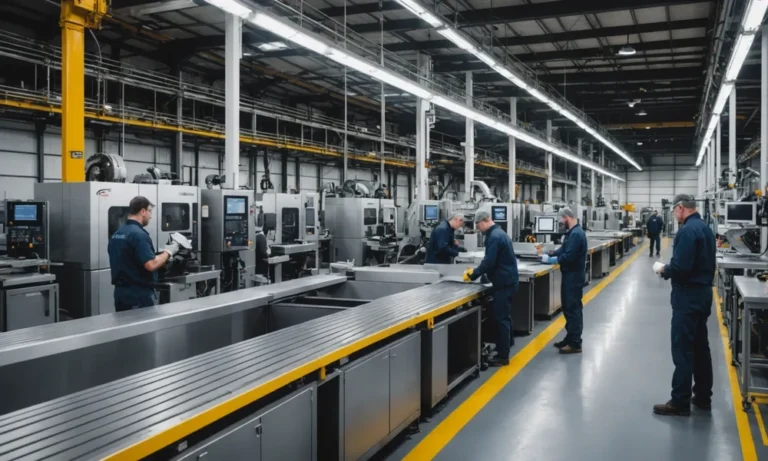
Valuing a manufacturing business is entirely different than valuing any ordinary business such as services and retail. The manufacturing businesses run in an environment that is highly capital intensive and hence the ability to earn in the future is highly dictated by the presence of machinery, complicated inventories, specialized labor and supply chain logistics. The mere assessment of the company’s revenues and profit may not truly provide insight into the value of the business. The first step to establish economic reality is through a thorough assessment of the business cash flow.

Accurately evaluating these operational dynamics often involves collaborating with specialized corporate advisors or professional advisors such as manufacturing business brokers australia to ensure that every variable, from plant capacity to inherent risk factors, is thoroughly accounted for during the appraisal process.

Recast Earnings and Normalising EBITDA

The basis of any sound industrial valuation is the concept of Recast Earnings, referred to as Normalized EBITDA (Earnings before interest, taxes, depreciation, and amortization), or Seller’s Discretionary Earnings (SDE). Accounting standards and tax systems are designed to defer tax liability through accelerated depreciation schemes, discretionary bonuses paid to executives, and unnecessary deductions. Financial normalization helps to eliminate these effects in order to uncover the real profitability of the industrial unit..

Key adjustments during recasting include:

  • Owner Compensation Adjustments: Resetting executive salaries and benefits to reflect fair market rates for professional management.
  • Non-Recurring Expenses: Reversing non-operational costs like one-off litigation, major unscheduled machinery repairs, or historical severance packages.
  • Discretionary Overhead: Eliminating personal vehicle leases, non-essential travel, and discretionary family compensation from operating expenses.

Calculating a pristine, normalized EBITDA provides prospective buyers and institutional investors with a reliable benchmark to compare core cash flow across competing industrial targets.

Assessing Tangible Machinery, Equipment, and Real Estate Assets

Unlike asset-light business models, an industrial facility derives a major portion of its intrinsic worth from physical infrastructure. A proper valuation of these fixed assets involves the ability to differentiate between accounting value and fair market value. Fixed schedules are used in the depreciation of capital equipment in standard accounting statements; however, good machines usually continue to hold value even when their paper value is zero.

A comprehensive asset valuation evaluates:

  • Tiered Equipment Appraisal: Delineating Orderly Liquidation Value, Fair Market Value, and Replacement Cost in Continued Use.
  • Past Maintenance and Useful Life of Equipment: Checking maintenance history, running time, and useful life of CNC machinery, press line and automated conveyor systems.
  • Ownership of the Facility and Term of Leases: Checking real estate deed or verifying leases to ensure continued operations after the sale.

.

Evaluating Customer Concentration and Recurring Revenue

A manufacturing plant generating strong annual cash flows can still suffer a steep valuation discount if its top-line rests on an overly concentrated client base. High customer concentration is among the most immediate red flags for acquirers. In case one customer accounts for more than twenty percent of total production volume, then the loss of this customer would greatly jeopardize the ability to service debts and achieve profitability.

Conversely, acquirers award premium valuations to operations supported by long-term supply agreements, predictable re-order schedules, and a well-diversified buyer base spanning multiple sectors. High switching costs-such as proprietary tooling, strict vendor qualification rules, or custom part specs-further shield revenue streams from competitive erosion.

Measuring Operational Systemisation and Workforce Stability

A facility whose operations exist entirely inside the founder’s head carries immense key-person risk. Manufacturing enterprises with a high value have well-structured operational frameworks, SOPs, and competent floor supervisors who can handle all activities in the shop independently.

Valuation professionals analyze human capital and workflow automation across several key vectors:

  • Automation and Modernization of Floors: How much can robotics, modern software, and automation of quality control affect throughput.
  • Retention and Competency of Workforce: Experience levels, certificates, and turnover statistics of major engineers, machinists, and supervisors.
  • Quality Management Certification Programs: Compliance certification programs that ensure product uniformity regardless of any direct involvement of the owner.

The Role of Working Capital and Supply Chain Security

Industrial valuations must factor in the substantial liquidity bound up in daily production cycles. A plant cannot fulfill orders without maintaining sufficient raw material stocks, work-in-progress (WIP) units, and finished inventory, balanced against vendor payables and trade receivables. Buyers expect a healthy target level of Net Working Capital (NWC) to transfer with the deal to prevent immediate operational shortfalls after closing.

In parallel, modern deal assessments scrutinize supply chain resilience. Structurally fragile are the systems where sourcing is done from a single source for key materials. Organizations that establish multi-source vendor relationships, have long-term contracts for sourcing their raw materials, and maintain local safety stocks enjoy better valuations in the market.

Selecting and Applying the Right Valuation Multiples

After the EBITDA number has been adjusted and the operational risks have been calculated, then the right enterprise multiple is used to determine the final valuation range. Multiples within the industrial industry differ from each other according to size, technological advancement, and competitive advantage. Basic job shops that operate at slim profits usually carry low multiples of SDE, while proprietary products with custom-made patents command high EBITDA multiples.

Primary drivers that expand valuation multiples include:

  • Exclusive intellectual property, registered patents, and custom tooling rights.
  • High regulatory barriers to entry and specialized manufacturing accreditations.
  • Sustained historical revenue growth paired with high plant capacity utilization.

Final Thoughts

Assessing the true value of any industrial manufacturing company goes well beyond looking at just a typical profit and loss sheet. This requires an all-around analysis that incorporates factors like normalized cash flow, the state of capital equipment, operational autonomy, diversification of the customer base, and working capital. The careful handling of each of these factors will help entrepreneurs identify hidden value and make their company ready for a favorable business deal. For an upcoming exit or even creating equity value in the long run, working with experienced corporate advisors such as manufacturing business brokers australia is crucial.

The 2020s have been a decade of significant improvement in the mattress manufacture industry. There has been a shift from traditional hand-stitching processes to precise production of mattresses involving high-tech machinery and the highest standards of design and direction. The best mattress manufacture companies, whether producing retail bedding or medical mattresses, understand what it takes to ensure that every mattress is designed to the highest of rigorous standards.

Mattress requirements of the last decade

Over the past decade, there has been a shift in what people are asking for when it comes to the types of mattresses on offer. This includes:

Foam mattresses

Memory foam mattresses have been a big thing for a while, but this has come on leaps and bounds in the 2020s, as more people embrace it. Foam mattresses hug to the contours of your body, relieving pressure on your joints and other pressure points, lowering the chances of bedsores and ulcers developing. There has since been advancement with the addition of cooling technology to help you stay cool and calm during sleep, as well as new materials, such as graphene-infused foam to enhance comfort levels, and zonal support to personalise sleep and comfort even further.

Hybrid mattresses

Hybrid mattresses bring the best of memory foam and innerspring mattresses together in one big, comfortable bed. These have become a popular option to combine foam and coil, offering the perfect balance for support and comfort. Pocketed coils work independently, unlike traditional coiled mattresses, adapting to each person’s body for better sleep. The additional layers of a hybrid mattress enhance comfort and support.

Latex mattresses

For natural, eco-friendly comfort, latex mattresses are one of the most durable options in modern, technologically advanced mattresses of the 2020s. It offers breathability and softness, as well as hypoallergenic properties that are environmentally conscious and a popular choice for the modern consumer.

Technology and delivery

Laser and CNC cutting, seam welding, and digital printing are all part of the modern mattress manufacturing process. The use of the latest technologies and designs, alongside eco-friendly, sustainable materials and the choice of eco-conscious packaging and delivery, all come into play for the modern consumer. This is the same whether for a single mattress at home or procuring contract bedding for hospitals or hotels.

Utilising the latest technology and design processes ensures that mattresses are built to last, offering a robust option that ensures the comfort and safety of those sleeping on them. This could be anything from a long-term resident in a care home who is constantly in bed, a patient in short-term care in a hospital requiring comfort for recovery, or a hotel guest looking for that perfect night’s sleep. Whatever the needs and strict requirements that you have for a mattress, you must find the right supplier to match the requirements and to balance that with cost and overall value.

At the cutting edge of the mattress manufacture industry stand the companies that refuse to stand still. If you are in the market for a production run of mattresses, for hospitals, care homes, hotels, or apartments, it’s important that you work with a supplier that you can trust. Choosing a mattress manufacture company that utilises the latest technology and that continues to invest in research and development across myriad industries helps you to meet strict standards and stay ahead of the competition.

Reliable production depends on stable processes from the first stage until delivery.Many manufacturers improve output through thailand precision machining for dependable dimensional accuracy.Small measurement control supports better assembly across many production environments.Careful planning also reduces unwanted variation during repeated manufacturing cycles.Quality checks support stable results without slowing normal production activity.Steady workmanship creates dependable components for many industrial requirements.

Reliable Production Standards

Accurate manufacturing begins with careful material selection before every production cycle.Stable equipment settings reduce unwanted variation during repeated operations.Regular inspection improves product reliability across different manufacturing tasks.Clear production planning supports consistent output during every working period.

Material Accuracy Control

Proper raw material selection supports dependable machining from beginning to completion.Stable cutting conditions reduce unnecessary waste during production activities.

Routine monitoring keeps finished dimensions within required measurement limits.Careful process review improves long term manufacturing consistency.

Daily Quality Verification

Regular inspection prevents unnoticed errors before products reach later production stages.Simple checking routines also improve confidence throughout manufacturing activities.

  • Measure every finished component before moving toward the following production stage.
  • Replace worn cutting tools before accuracy begins showing noticeable reduction levels.
  • Review machine calibration during scheduled inspection periods every working week.
  • Record measurement values for future comparison during repeated production cycles.
  • Maintain clean working areas for improved operational stability every working shift.
  • Verify drawing details before starting every machining operation without exception.
  • Observe cutting conditions during production for better dimensional consistency always.
  • Keep inspection records available for future production reference whenever required.

Consistent Manufacturing Results

Stable production depends upon planning instead of repeated correction after completion.Regular maintenance reduces unexpected interruptions during manufacturing activities.

Clear communication between production teams improves operational reliability every day.Continuous monitoring supports dependable output from beginning until delivery.

Which Practices Maintain Stable Production Across Multiple Industrial Applications Today?

Reliable manufacturing depends upon accurate planning before each production process begins. Proper measurement routines reduce unnecessary variation during every working stage. Careful equipment monitoring also prevents small errors from becoming larger production concerns. thailand precision machining supports dependable measurement control across many industrial applications requiring reliable dimensional accuracy.

Regular inspection keeps production moving without unnecessary delays during busy schedules. Material verification improves product reliability before machining begins. Scheduled maintenance supports stable equipment performance throughout repeated manufacturing cycles. Clear documentation helps production teams review previous results while improving future operational consistency through practical daily improvements.

Stable Output Every Cycle

Reliable manufacturing grows through careful planning instead of repeated correction.Routine inspection supports dependable production during every scheduled operation.Simple process control improves long term product consistency across many industries.

Process Comparison Overview

Different production stages require different forms of operational attention.Balanced planning improves reliability across complete manufacturing activities.

Service Feature Standard Unplanned Play Structured Planned Play
Budget Control Impulsive deposit changes Predefined daily cash caps
Time Duration Uncontrolled long hours Fixed thirty-minute limits
Reality Checks Rare self-monitoring Automatic platform alerts
Choice Basis Visual appeal alone Checked payout statistics

Steady monitoring supports accurate results without unnecessary production delays.Simple review methods help maintain dependable product quality.

Consistency Builds Reliable Manufacturing Success

Reliable manufacturing grows through careful planning every working day.Small improvements create dependable results across different production requirements.Steady inspection reduces variation before products leave the production area.Consistent execution remains more valuable than chasing perfect outcomes every time.Long term reliability comes from disciplined processes repeated with care every day.