Archive

February 2023

Browsing

Video content is a fast-growing digital marketing method. It’s a great way to increase the exposure of your company’s products or services by capturing your possible customers’ attention. But video content can only have the right impact if it is done professionally. 

Although a DIY method may work for your brand, you must consider Benjy Films video production to ensure the quality of the resulting content. Here are reasons you should outsource your videos:

Tap Into the Experience of Experts

If you have been able to film and record your videos, you must content with post-production, which requires expert knowledge of different software programs that need to be used. Also, this process takes time and you may underestimate the amount of work that goes into it. Editing the footage and adding post-production effects can take several hours. It’s important to ensure that audio and videos are matched up. Also, footage needs to be looked through, so any undesirable elements must be taken out. 

Getting these things wrong can result in a cheap-looking video. Regardless of the quality of the shoot, dated transitions and not editing in the right place can make any video look amateurish. Corporate video production companies can accelerate the entire process as they know what must be done and possess the experience to make this occur fast. 

Access State-of-the-Art Video Production Equipment

Although anyone can access video equipment by using mobile phones and devices, some people do not have access to high-quality equipment. When you record on your phone, you can end up with a DIY quality to the resulting video content that has erratic zooming and unsteady shots. If you don’t want this kind of video, you should opt for a professionally-produced one. 

A reputable video production company uses professional cameras. These cameras will provide you with better shots, as well as cleaner framing and zooming. Also, they have the required stands, ensuring anything they take does not shake.

To use the right lenses and other camera equipment, you may need to spend thousands of dollars. But video production companies invest in such expenses. As their client, you can benefit from the equipment they use. You can only achieve professional-level videos when the right equipment is used for making them. 

Take Advantage of Quality Sound

Sound can make or break a video. It can offer emotions and instructions to the audience they may not see on the screen. Just like the image itself, the sound of your video commercial must be well thought out and executed. 
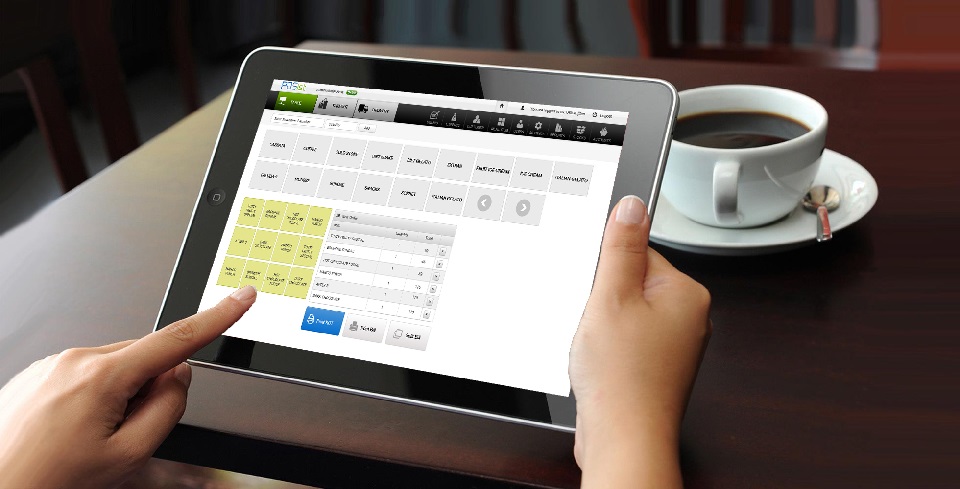
For most food businesses, a point-of-sales (POS) system is an essential tool that helps to manage sales, track inventory, and monitor customer behavior. But with so many different options available, it can be difficult to know which POS system to choose for your business.

The best way to determine the right POS system for you is to consider what features your business needs and which option provides the most value. Here are some key things to look out for when deciding on a F&B pos system:

Compatibility

Make sure that the POS system you choose is compatible with other software used within your business, like accounting systems, customer loyalty programs, or payment processing systems. If a POS system isn’t compatible, it could create data silos and inefficiencies that slow down operations.

Reporting

A good POS system should have comprehensive reporting capabilities to give you insights into the performance of your business, such as sales metrics and customer segmentation. This helps you make informed decisions about your business operations.

Security

A POS system should also offer robust security features to protect customer data and prevent fraud or theft. Look for a system that has built-in encryption, two-factor authentication, and other security measures.

Scalability

Scalability should also be a key consideration when choosing a POS system. If you’re a small business just starting out, it may make more sense to opt for a system that can easily grow with your business. Scalable systems will allow you to add new features and functionality as needed, without having to completely overhaul the existing setup.

Customer Support

Lastly, make sure the POS system you choose offers excellent customer support to help you with any questions or issues.

Keep these tips in mind when shopping for a POS system, and you’ll be well on your way to finding the perfect solution for your food business!

What are the types of F&B pos system?

The selection of the right point-of-sale system is critical to running a successful food business. A POS system allows customers to purchase items quickly and accurately, while streamlining processes such as inventory tracking, sales reporting and staff management.

Here are five common types of point-of-sale systems available for food businesses:

Cloud-Based POS Systems

These systems are hosted in the cloud, meaning they require no hardware installation or maintenance. They typically offer a comprehensive set of features, including inventory and staff management, customer relationship tools, marketing capabilities and analytics.

Cloud-based POS systems also give you the freedom to access your data from any device with an internet connection.

Mobile POS Systems

These are becoming increasingly popular for food businesses, as they give you the flexibility to take payments at any location. With mobile payment technology, customers can pay quickly and easily with their phones or other portable devices. They also provide features such as customer loyalty programs, analytics and integrated marketing capabilities.

Hybrid POS Systems

As the name suggests, these systems combine cloud-based and mobile technology. They offer the convenience of a cloud-based system combined with the portability of a mobile system. Hybrid POS systems are becoming increasingly popular due to their flexibility and ability to provide both functions in one integrated solution.

Self-Service POS Systems

These systems allow customers to order and pay for items without the assistance of a cashier. They are commonly found in quick serve restaurants, fast food chains and convenience stores.

Self-service POS systems make it easy for customers to place orders quickly and accurately, while also streamlining back-end processes such as inventory tracking and reporting.

Traditional POS Systems

These are the most common type of point-of-sale system and they typically involve hardware installation, such as a cash register or terminal. Some traditional POS systems are also networked, allowing multiple terminals to be used at once. They provide basic functionality such as sales tracking, inventory management and customer loyalty programs.

Choosing the right point-of-sale system for your food business will depend on your specific needs and budget. Consider what features are most important to you and make sure the system you select meets those requirements. With so many different types of POS systems available, it’s important to do your research before making a purchase.

With the right point-of-sale system in place, you can provide your customers with a seamless checkout experience and keep your business operations running smoothly. Whether you choose a cloud-based, mobile, hybrid or traditional system, make sure to research all of your options before making a decision.

To take advantage of the Liberalized Remittance Scheme (LRS), you will need the following documents:

-A duly completed and signed LRS application form

-Your passport

-Proof of residential address (utility bill, lease agreement, etc.)

-Bank statements or passbook showing your income and/or assets

-Income tax return (ITR) Form 2316 or 1701 with BIR stamp

-Authorization letter from your employer (if employed)

Setting up an Account with an Authorized Dealer.

The first step in taking advantage of the LRS is to set up an account with an authorized dealer bank. You can do this by visiting any branch of a participating bank and requesting for an LRS application form. The list of banks authorized by the Bangko Sentral ng Pilipinas (BSP) to deal in foreign currency can be found on the BSP website. Once you have submitted the required documents, the bank will then open an account for you which will be used exclusively for your foreign currency transactions under the LRS.

Submitting an Application with Required Documents.

After setting up your account with an authorized dealer, you will need to submit a complete and signed LRS application form together with all the required supporting documents listed in subsection 3.1. Once your application has been approved, you will be issued an authorization letter which must be presented to your bank every time you make a remittance under the scheme. The authorization letter is valid for one year and can be renewed annually upon submission of a new application form and supporting documents.

Receiving the Authorization Letter

You will receive your authorization letter within 7 business days from the date when your complete and correctly filed application was received by the BSP Foreign Exchange Regulatory Department (FERD). If additional information or clarification is needed, FERD will contact you directly within 5 business days from receipt of your application form; otherwise, FERD shall issue the authorization letter within 2 business days after contacting you, if applicable. In case FERD denies your request for availing of liberalized remittance scheme, they shall inform you accordingly in writing stating therein their findings and recommendations, if any, within 7 business days from the date of receipt of complete requirements from you. Otherwise, if no action is taken on your request beyond 7 business days from the date of receipt by FERD, it shall be deemed as approved. Your authorizing officer in charge at your chosen bank may proceed with processing your transaction/s. Please note that once approved, You are enjoined to strictly observe all provisions under existing laws, rules, and regulations governing foreign exchange transactions including those related to Anti – Money Laundering Act (AMLA) as well as Know – Your – The customer’s Rule (KYC).

Making Remittances

Once you have received your authorization letter, you may now make foreign currency remittances under the LRS up to the maximum amount specified therein Vested. There are two ways to make remittances under the scheme: through a bank or through an authorized money changer. When making a remittance through a bank, you will need to present the following documents:

-Your passport

-The original copy of your authorization letter

-Proof of purpose of remittance (e.g. invoices, contracts, etc.)

-Any other document required by the authorized dealer bank

If you choose to make a remittance through an authorized money changer, you will only need to present your passport and the original copy of your authorization letter. Please note that all transactions made under the scheme must be supported by proper documentation as required by law.


It is the goal of the logistics industry to meet the varying requirements of each individual business by developing, updating, and adapting methods and tools that may help to streamline the supply chain, decrease its length, and lower its associated costs. Cross-docking is a common example of such a process.

Cross-docking is when one shipment’s goods are transferred to another without any intermediate storage. In the cross-docking model, a distribution center’s principal function is not product storage but rather the movement of items from one site to another.

In a cross-docking facility, for instance, the distribution center’s principal function is to provide a space for the smooth transfer of goods to the next step in the distribution chain. Because of the scarcity of storage space, all incoming and exiting items must be carefully categorised. Once products have arrived at a docking terminal, they are quickly processed and loaded into the leaving trucks or shipping containers, and the whole operation is often finished within twenty-four hours.

High degrees of automation, strict supervision, and full visibility of suppliers and end customers are essential for the success of cross-docking facilities. That much is obvious. Most businesses understand they need the support and tools a complete 3PL can provide them to achieve this objective in New York City Cross Docking.

Various Cross-Document Methods

Common methods of cross-docking include: First, the simplest and most straightforward method is continuous cross-docking. All applications may be reduced to this one. When it comes to products and materials, continuous cross-docking means that there is a constant flow of transfer happening via one hub. This process is sequential, going from receiving packages to sending them out. There may be sporadic, brief wait waits if trucks arrive at the site at different times.

In addition, consolidation agreements might be implemented. To consolidate many smaller freight or product loads into one larger load is a common practise in cross-docking facilities. Some of the items in the site’s minimum storage might be combined with incoming goods to make full truckload shipments.

The third process is the antithesis of the second, consolidation, and is recognised by its name, deconsolidation. Instead of combining many loads into one larger one, the deconsolidation method splits up a large load into several smaller ones. Direct-to-customer shipments often use this route.

Cross-docking: the benefits and drawbacks of implementing it

One of the biggest advantages of cross-docking is the ease with which it may streamline the supply chain. Without a central warehouse, the time and money spent on storing and paperwork no longer matter, and the product may be moved quickly along the supply chain.

The risk of damage during the process phase in which inventory is being handled is reduced when that phase lasts less time. Costs associated with labour have been reduced as a consequence. In addition to saving money, this cost-benefit analysis reveals a reduction in inventory costs as a result of shorter storage times and quicker processing, allowing for faster delivery to both distributors and end customers.

Yet, there are certain risks associated with switching to cross-docking

If your company is considering cross-docking as a means of improving your process, it is crucial that you have a thorough awareness of the preliminary costs and needs for carrying it out properly. Having a computerised and regularly serviced logistics system, as well as investing heavily in automation, visibility, incoming and outgoing logistics, and a suitable transport fleet, are all crucial.

SAP Business One is business management software developed by SAP SE. It is designed for small and medium-sized enterprises (SMEs) to help manage their financials, sales, customer relationships, and operations.

SAP Business One provides an integrated view of all the key functions of a business, including accounting, financials, sales, purchasing, inventory, and customer relationship management (CRM). The software also includes tools for analytics, reporting, and business intelligence.

What are the core features of SAP B1?

SAP Business One, commonly known as SAP B1, is an enterprise resource planning (ERP) software designed for small and medium-sized businesses. The following are some of the core features of SAP B1:

  1. Financial Management: SAP B1 provides robust financial management capabilities, including general ledger, accounts payable, accounts receivable, bank management, and cost accounting.
  2. Sales and Customer Management: The software enables you to manage all aspects of sales, including quotes, orders, invoices, and deliveries. You can also manage customer information, track customer interactions, and analyse customer behaviour.
  3. Inventory Management: SAP B1 provides comprehensive inventory management capabilities, including stock levels, item tracking, and inventory valuation.
  4. Purchasing and Procurement: The software enables you to manage the purchasing process, including requisitions, purchase orders, and goods receipts.
  5. Production and Bill of Materials: SAP B1 provides support for the production process, including the management of bills of materials, routing, and capacity planning.
  6. Human Resources and Payroll: The software offers tools for managing employee information, payroll, and benefits administration.
  7. Reporting and Analytics: SAP B1 provides a range of reporting and analytical tools, including financial statements, management reports, and dashboards.
  8. Mobile Access: The software provides mobile access to key business information and processes, allowing you to stay connected to your business while on the go.

One of the key benefits of SAP Business One is its scalability. As a business grows and expands, SAP Business One can be configured to meet its changing needs, making it an ideal solution for SMEs that are looking to streamline their operations and stay ahead of the competition. So, let’s understand the SAP Business One pricing because it depends on the service provider chosen and your business needs. You can even contact Michell Consulting Group in Miami for more details.

The pricing structure of SAP Business one

The pricing structure of SAP Business One varies based on several factors, including the deployment method (on-premise, cloud-based), the number of users, and the geographic location. On-premise deployment generally requires an upfront payment for the license and an annual maintenance fee, while cloud-based deployment is typically subscription-based and billed on a monthly or annual basis.

Additionally, the pricing for SAP Business One can vary depending on the type of license you purchase. For example, a “limited user” license is typically less expensive than a “professional user” license, and the cost can increase if you need to add additional functionalities or modules.

In general, the cost of SAP Business One can range from a few thousand dollars for a small deployment to hundreds of thousands of dollars for a large-scale deployment. To get a more accurate estimate of the cost for your specific needs, it’s best to speak with an SAP representative or a partner who can help you determine the right solution for your business.

Overall, SAP Business One is a comprehensive and flexible business management solution that can help SMEs improve their operations and drive growth.